Free shipping over IDR 2,000,000 Free starter kit for all new customers Refer a friend: give IDR 200,000, get IDR 200,000

NIRA Protocol Guide

Product-specific answers for every protocol.

Compare benefits, who each product is best for, when clients usually evaluate progress, and how the NIRA calculator turns vial strength and water volume into syringe units.

Product Benefits

Specific protocol guidance, not generic FAQ copy.

Each answer mirrors the product-page style: goal, best fit, benefit language, expected tracking window, and calculator-reference dosing. This is education only, not personal medical advice.

GHK-Cu 50 MG
Skin Health

GHK-Cu 50 MG

Best for clients building a skin-first routine around visible texture, collagen support, glow, fine-line appearance, and recovery from sun, travel, or training stress.

What benefits is it built around?

GHK-Cu is the beauty-and-repair peptide in the NIRA system. The benefit is specific: skin quality, visible resilience, smoother tone, and a more polished healthy-aging routine.

How long until clients judge progress?

Weeks 1-2 are about consistency. Around 1 month, clients usually track glow, hydration, texture, and how quickly skin looks calm again. Around 3 months, the routine is easier to judge for visible skin quality and recovery support.

What does the calculator recommend?

Calculator reference: 50 mg reconstituted with 3 mL BAC water. Conservative skin support is 1 mg, 5x weekly, about 6 syringe units. Standard skin protocol is 2 mg, 5x weekly, about 12 syringe units.

How is it mixed?

Add the selected BAC water volume slowly into the vial, let the powder dissolve, and swirl gently rather than shaking hard. The calculator assumes the full 50 mg vial is mixed with 3 mL.

How do syringe units work here?

On a U-100 insulin syringe, 100 units equals 1 mL. With the NIRA 3 mL mix, 1 mg is about 0.06 mL, or 6 units; 2 mg is about 0.12 mL, or 12 units.
View product
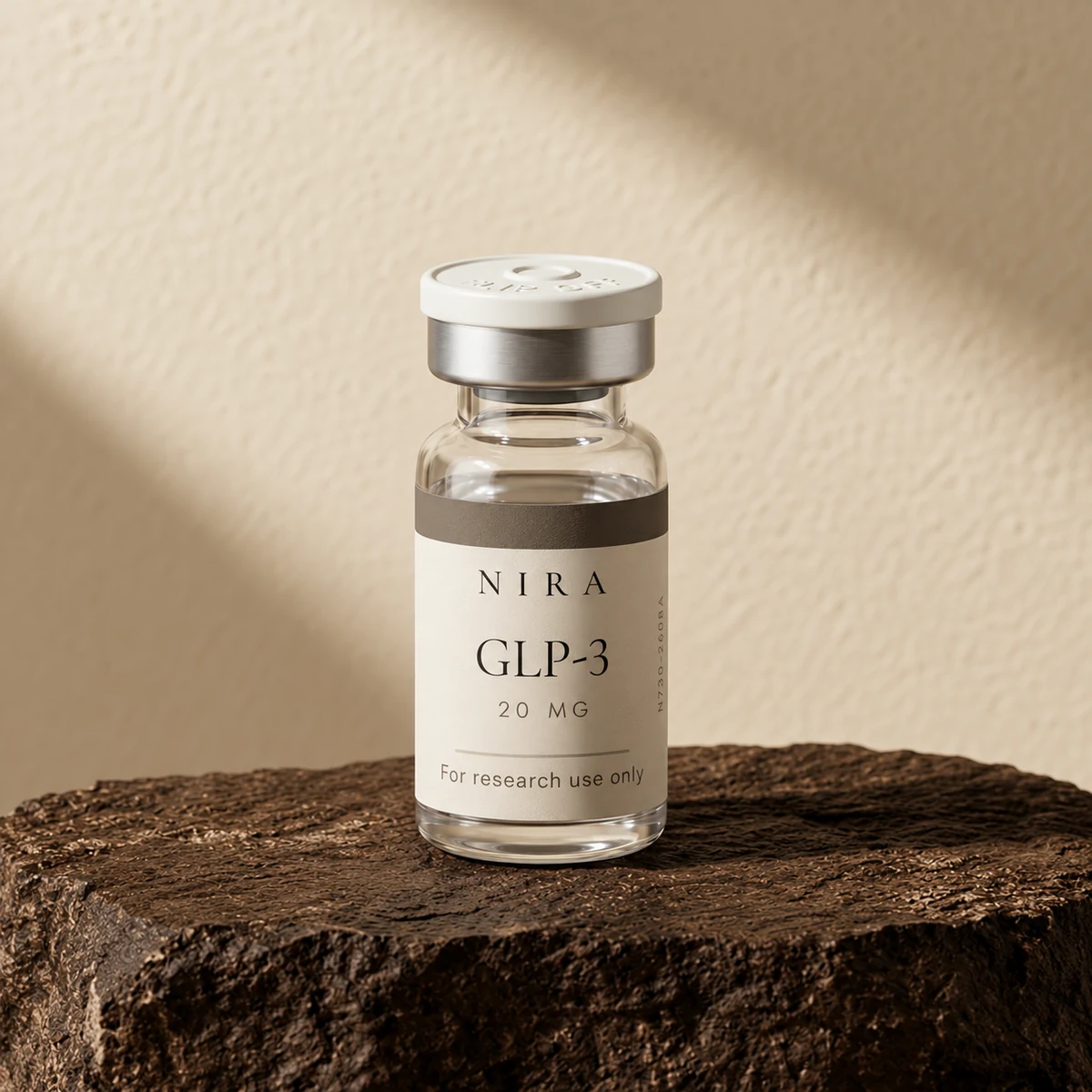
GLP-3 20 MG
Weight Management

GLP-3 20 MG

Best for clients who want the more concentrated GLP-3 option for appetite rhythm, body-composition momentum, and a structured weekly metabolic routine.

What benefits is it built around?

GLP-3 20 MG should be positioned around metabolic support, appetite routine, portion control, and body-composition consistency. It is the stronger format for people comparing GLP-3 strengths.

How long until clients judge progress?

Weeks 1-2 are for appetite and routine tracking. Around 1 month, customers usually judge meal control, cravings, and consistency. Around 3 months, the routine is easier to assess for waistline and body-composition progress.

What does the calculator recommend?

Calculator reference: 20 mg reconstituted with 1 mL BAC water. Conservative start is 0.5 mg once weekly, about 2.5 syringe units. Standard protocol is 1 mg once weekly, about 5 units. Escalation reference is 2 mg once weekly, about 10 units.

How is it mixed?

Use the calculator water field if support recommends a different volume. More water makes each draw larger; less water makes each draw smaller. The default NIRA math uses 1 mL BAC water.

How do syringe units work here?

At 20 mg per 1 mL, each 0.01 mL syringe unit contains 0.2 mg. That is why small GLP-3 20 MG doses show low unit numbers.

View product
GLP-3 10 MG
Weight Management

GLP-3 10 MG

Best for clients who want an approachable GLP-3 path for appetite support, body-composition structure, and weekly routine building.

What benefits is it built around?

GLP-3 10 MG should feel like the easier entry point: metabolic support, appetite routine, steadier eating habits, and a clearer framework for weight-management momentum.

How long until clients judge progress?

Weeks 1-2 focus on appetite rhythm and routine. Around 1 month, clients often review cravings and consistency. Around 3 months, the body-composition picture is clearer when the routine has been steady.

What does the calculator recommend?

Calculator reference: 10 mg reconstituted with 1 mL BAC water. Conservative start is 0.5 mg once weekly, about 5 syringe units. Standard protocol is 1 mg once weekly, about 10 units. Escalation reference is 2 mg once weekly, about 20 units.

How is it mixed?

The default NIRA setup is 1 mL BAC water for the 10 mg vial. If the water volume changes, use the calculator again because the syringe units change with concentration.

How do syringe units work here?

At 10 mg per 1 mL, each 0.01 mL syringe unit contains 0.1 mg. A 1 mg reference draw is therefore 10 units.

View product
MOTS-C 10 MG
Performance & Vitality

MOTS-C 10 MG

Best for clients focused on cellular energy, training output, vitality, metabolic resilience, and a morning-friendly performance routine.

What benefits is it built around?

MOTS-C should speak to energy and output, not vague wellness. It is the protocol for people who want steadier daytime drive, better training rhythm, and a performance-oriented longevity routine.

How long until clients judge progress?

Weeks 1-2 are about noticing energy rhythm and routine tolerance. Around 1 month, clients usually review training consistency, afternoon energy, and recovery between demanding days. Around 3 months, performance and vitality patterns are easier to compare.

What does the calculator recommend?

Calculator reference: 10 mg reconstituted with 1 mL BAC water. Conservative cellular-energy reference is 0.5 mg, 2-3x weekly, about 5 syringe units. Literature reference is 2.5 mg, 2-3x weekly, about 25 units.

How is it mixed?

The default NIRA mix is 1 mL BAC water. Because MOTS-C doses can vary widely by reference profile, the calculator should be used before drawing.

How do syringe units work here?

At 10 mg per 1 mL, 0.5 mg is 5 units and 2.5 mg is 25 units on a U-100 syringe.

View product
TB-500 10 MG
Recovery & Repair

TB-500 10 MG

Best for clients thinking about broad recovery, mobility, soft-tissue support, training consistency, and movement that feels less restricted.

What benefits is it built around?

TB-500 should be written around recovery rhythm, mobility, tissue-support routines, and feeling less held back between hard sessions. It pairs naturally in comparison copy with BPC-157.

How long until clients judge progress?

Weeks 1-2 are for consistency and movement tracking. Around 1 month, clients usually review soreness, mobility work, and post-training recovery. Around 3 months, the routine can be judged against longer-term repair goals.

What does the calculator recommend?

Calculator reference: 10 mg reconstituted with 1 mL BAC water. Baseline recovery reference is 0.5 mg, 2x weekly, about 5 syringe units. Soft-tissue reference is 2.5 mg, 2x weekly, about 25 units.

How is it mixed?

The default NIRA setup is 1 mL BAC water. Swirl gently after adding water and use the calculator if the reconstitution volume changes.

How do syringe units work here?

At 10 mg per 1 mL, 0.5 mg is 0.05 mL, or 5 units. A 2.5 mg reference draw is 0.25 mL, or 25 units.

View product
Tesamorelin 10 MG
Healthy Aging

Tesamorelin 10 MG

Best for clients focused on healthy aging, body composition, sleep quality, vitality, and a more restorative evening-oriented routine.

What benefits is it built around?

Tesamorelin copy should feel more premium and longevity-focused: body-composition support, sleep quality, energy, growth-hormone-releasing pathways, and feeling more restored.

How long until clients judge progress?

Weeks 1-2 are about settling into the routine. Around 1 month, clients usually track sleep quality, morning restoration, and early body-composition momentum. Around 3 months, waistline, vitality, and consistency are easier to judge.

What does the calculator recommend?

Calculator reference: 10 mg reconstituted with 2 mL AA water. Conservative healthy-aging reference is 0.5 mg, 5x weekly, about 10 syringe units. Body-composition reference is 1 mg, 5x weekly, about 20 units. Clinical reference is 2 mg once daily, about 40 units.

How is it mixed?

Tesamorelin is the exception in the current NIRA calculator: it uses AA water in the supplied instructions, not BAC water. Keep that distinction clear in FAQ copy.

How do syringe units work here?

At 10 mg per 2 mL, each 0.01 mL syringe unit contains 0.05 mg. That makes 0.5 mg equal 10 units, 1 mg equal 20 units, and 2 mg equal 40 units.

View product
BPC-157 10 MG
Recovery & Repair

BPC-157 10 MG

Best for clients thinking about targeted repair, nagging recovery issues, movement confidence, tissue-support routines, and whole-body resilience.

What benefits is it built around?

BPC-157 should be the targeted repair protocol in the FAQ: recovery consistency, whole-body support, tissue-focused goals, and a clearer routine when little issues keep lingering.

How long until clients judge progress?

Weeks 1-2 are for consistency and body-response tracking. Around 1 month, clients usually review movement comfort, repair rhythm, and training continuity. Around 3 months, the repair routine is easier to evaluate.

What does the calculator recommend?

Calculator reference: 10 mg reconstituted with 2 mL BAC water. Conservative repair reference is 0.25 mg, 5x weekly, about 5 syringe units. Standard repair protocol is 0.5 mg, 5x weekly, about 10 units.

How is it mixed?

The default NIRA setup uses 2 mL BAC water. Because the dose is smaller than many other protocols, the 2 mL mix makes the syringe units easier to read.

How do syringe units work here?

At 10 mg per 2 mL, each 0.01 mL syringe unit contains 0.05 mg. That makes 0.25 mg equal 5 units and 0.5 mg equal 10 units.

View product
NIRA Reusable Pen + Case Peptide Not Included
Accessory

NIRA Reusable Pen + Case Peptide Not Included

Best for clients who want a cleaner, more polished setup for storage, travel, and routine organization. It is an accessory, not a peptide.

What benefits is it built around?

The pen and case copy should focus on presentation, repeat use, protection, portability, and making the protocol feel less disposable.

How long until clients judge progress?

Day 1 is about inspecting the accessory and organizing the setup. Over time, the value is cleaner storage, easier travel, and a more considered routine.

What does the calculator recommend?

No dosing applies. The product includes the reusable pen and protective case only. Peptide, cartridge, vial, and diluent are not included.

How is it mixed?

No reconstitution applies to this accessory.

How do syringe units work here?

No syringe draw applies to this accessory.

View product

Calculator Logic

How NIRA turns a dose into syringe units.

What is the calculator actually calculating?

It uses the product's vial strength, selected water volume, and reference dose. First it calculates concentration: vial mg divided by water mL. Then it divides the desired mg dose by that concentration to get mL. On a U-100 syringe, mL x 100 equals syringe units.

Why does changing water volume change the draw?

Water volume changes concentration. The same 1 mg dose requires fewer units in a stronger mix and more units in a more diluted mix. That is why the product page calculator updates when the water field changes.

What does "weekly reference total" mean?

It is simple math from the selected dose and frequency. For example, a 1 mg dose used 5x weekly equals a 5 mg weekly reference total. It is not a personal prescription.

Does the weight field change the dose?

No. In the current calculator, weight is recorded in the note so support can see context, but the displayed reference profiles are fixed by product and goal.

Is this dosing medical advice?

No. The calculator and FAQ are general education based on NIRA's supplied reference profiles. Individual needs vary, and clients should consult a qualified healthcare professional before starting any peptide protocol.

BAC Water & Syringes

How to explain mixing and drawing without making it vague.

How do I mix a peptide vial with BAC water?

Use clean handling, a sterile syringe, and the water volume shown in the product calculator. Add the diluent slowly against the inside wall of the vial, let the powder dissolve, and swirl gently. Do not shake aggressively.

Do all products use BAC water?

No. The current NIRA calculator uses BAC water for GHK-Cu, GLP-3, MOTS-C, TB-500, and BPC-157. Tesamorelin is marked separately with AA water in the supplied instructions, so do not describe Tesamorelin as a BAC-water product.

How do I draw the right amount in a syringe?

After the vial is mixed, use the product-page calculator. It displays the draw in syringe units. Pull the plunger to that unit mark on a U-100 insulin syringe, then re-check the product, strength, water volume, and selected reference profile before use.

What if the solution looks cloudy or has particles?

Do not rely on a questionable vial. Keep the product and packaging, take clear photos, and contact NIRA support with the batch details before using it.

How should I store mixed products?

Follow the label and product-specific support guidance. Keep the vial capped, clean, clearly labeled, and separated from other strengths so GLP-3 10 MG, GLP-3 20 MG, and other protocols are not confused.

Quality & Fit

The questions customers should ask before ordering.

Which goal matters most?

Choose GLP-3 for body composition, GHK-Cu for skin quality, MOTS-C for energy, Tesamorelin for healthy-aging support, and TB-500 or BPC-157 for recovery-focused routines.

What batch am I receiving?

Check product name, strength, batch identifier, and available testing information. If anything does not match the order, contact support before use.

When should I evaluate?

Most pages frame early tracking at weeks 1-2, routine review around 1 month, and clearer goal assessment around 3 months of consistency.

When should I ask support?

Ask before ordering if you are comparing protocols, after delivery if anything looks wrong, and any time calculator math or reconstitution volume is unclear.

Delivery & Replacement

What happens after checkout?

How does same-day Bali delivery work?

Orders in Bali are coordinated by support and delivered by Grab or Gojek when stock, timing, and courier availability line up. Keep your phone available and your destination pin accurate.

What should I check when the order arrives?

Confirm the product name, strength, vial count, accessory items, batch details, and packaging condition before mixing or using anything.

Can I return or refund a product?

No. NIRA does not accept product returns and does not offer refunds. If something is damaged, incorrect, incomplete, or otherwise not right, contact support within 7 days for replacement review.

What should I send to support?

Include your order number, delivery name, phone number, product photos, packaging photos, batch details, and a short description of the issue.